
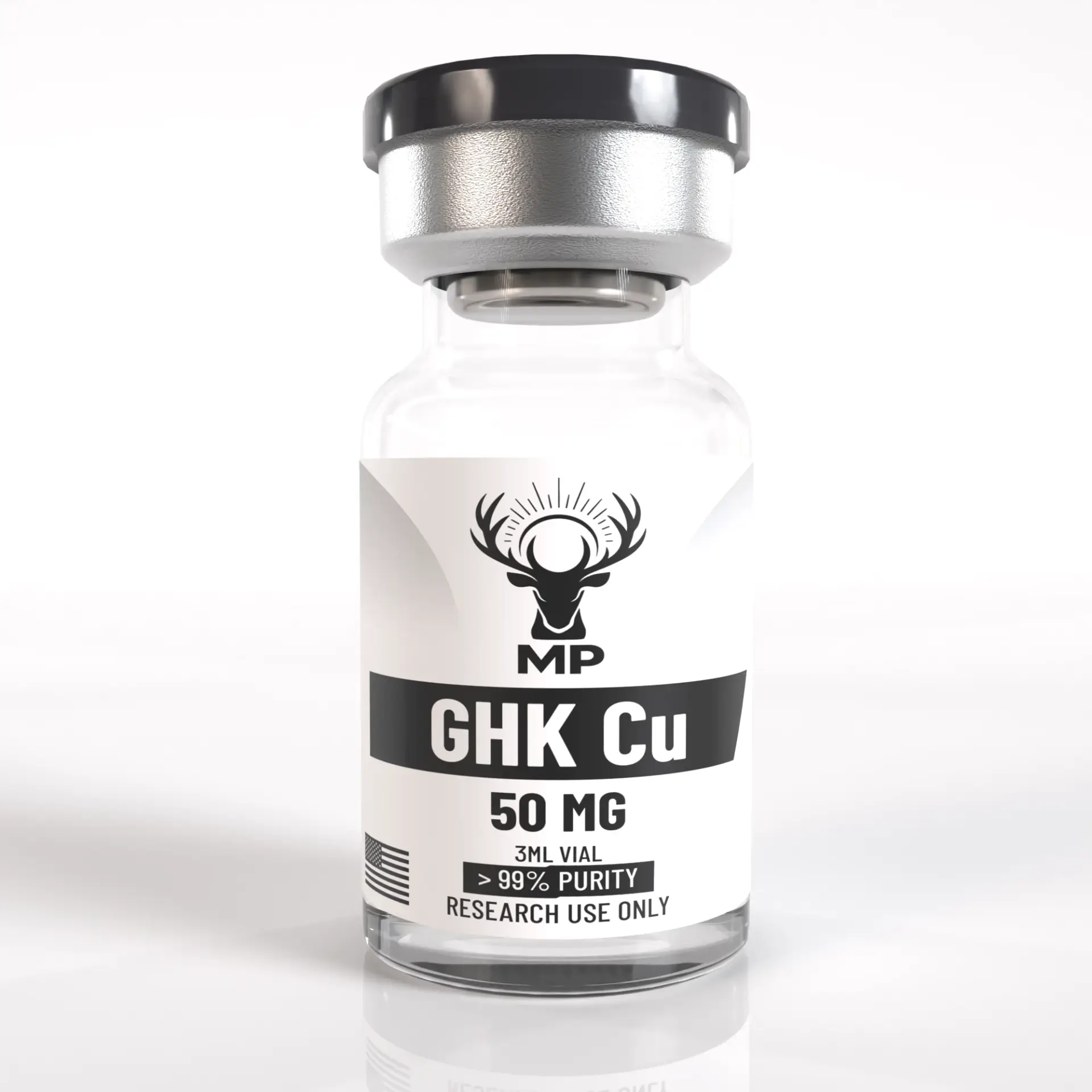
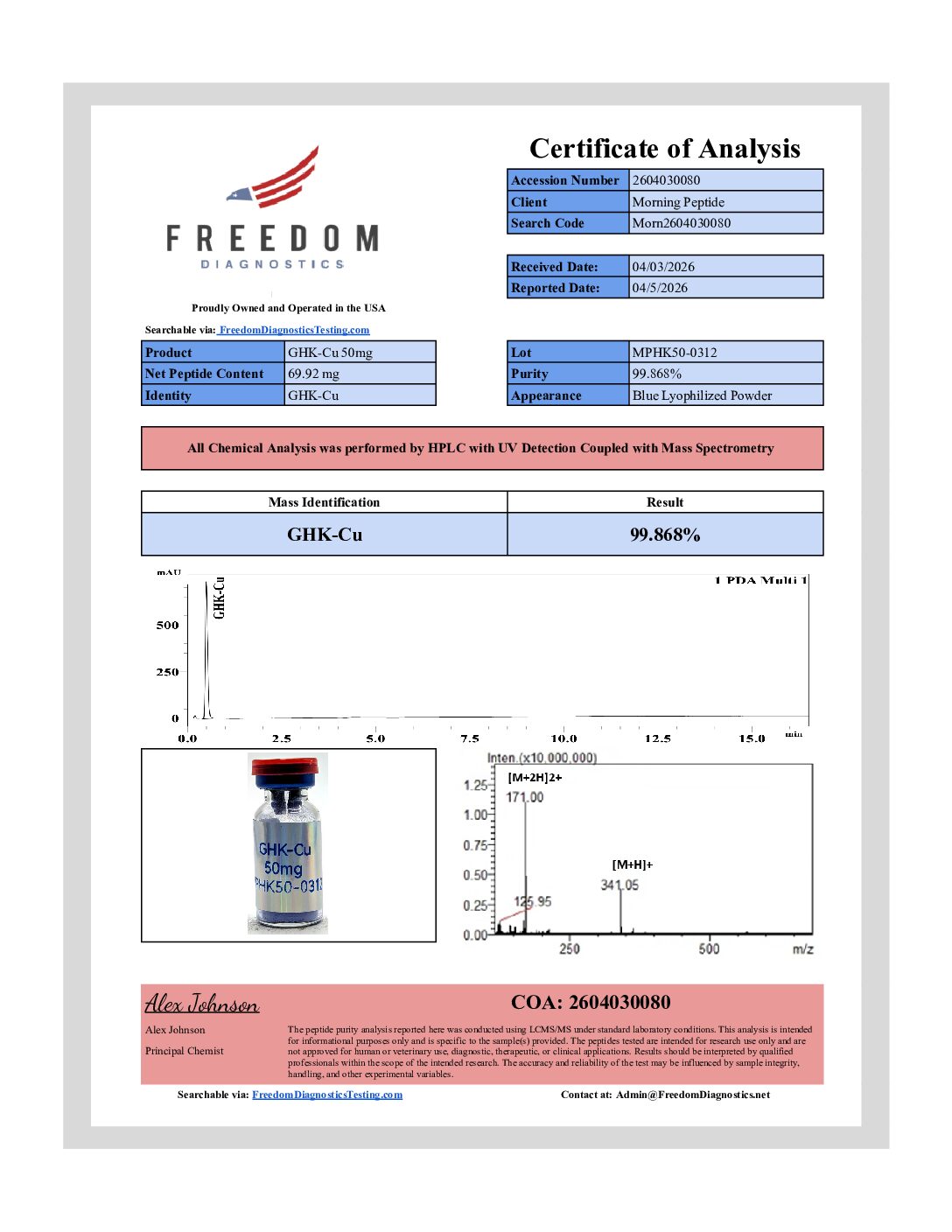
GHK-Cu 50MG
GHK-Cu, also known as Glycyl-L-histidyl-L-lysine copper, is a peptide complex widely studied in academic and preclinical research for its potential biological effects. This product is intended exclusively for research applications within a laboratory environment, adhering to strict experimental protocols. GHK-Cu has been extensively investigated for its biochemical properties and possible cellular interactions, making it a valuable compound for researchers exploring wound healing, cellular repair mechanisms, and protein synthesis pathways.
The chemical structure of GHK-Cu consists of a tripeptide backbone (Glycyl-Histidyl-Lysine) coordinated with a copper ion (Cu2+). This copper coordination appears to enhance its stability and bioactivity, distinguishing it from other copper-peptides in terms of solubility, membrane permeability, and cellular uptake.
Research Context
GHK-Cu emerged from early studies examining its role in wound healing. Initial observations in animal models demonstrated accelerated epithelialization and enhanced collagen deposition, suggesting a potential mechanism of action through modulation of cellular processes involved in tissue regeneration. Subsequent research expanded into areas such as protein folding, intracellular trafficking, and oxidative stress responses.
Research Overview
In preclinical investigations, GHK-Cu has been shown to exhibit several unique characteristics:
- Stimulates fibroblast proliferation and extracellular matrix production
- Promotes keratinocyte migration and wound closure
- Modulates signaling pathways associated with cellular repair mechanisms
- Enhances protein synthesis and folding within the endoplasmic reticulum
The copper coordination in GHK-Cu appears to play a crucial role in enhancing its bioavailability and biological activity, with some studies suggesting that copper may facilitate peptide penetration across cellular membranes.
Key Research Focus Areas
- Wound Healing Mechanisms
- Epithelialization kinetics
- Collagen deposition patterns
- Granulation tissue formation
- Inflammatory response modulation
- Cellular Repair Pathways
- Endoplasmic reticulum stress response
- Protein folding chaperone activity
- Autophagy regulation
- Mitotic checkpoint modulation
- Biomolecular Interactions
- Peptide-lipid membrane interactions
- Copper-mediated cellular uptake
- Protein-protein complex formation
- Intracellular trafficking pathways
Structural and Chemical Characteristics
| Property | Description |
|---|---|
| Peptide Composition | Glycyl-L-Histidyl-L-Lysine tripeptide |
| Copper Coordination | Cu2+ ion coordinated in the peptide backbone |
| Molecular Weight | Approximately 670 Da (excluding copper coordination) |
| Solubility | Highly soluble in aqueous solutions, particularly in physiological buffers |
| Stability | Enhanced stability compared to free copper or non-copper bound peptides |
Research investigations have typically utilized GHK-Cu in concentrations ranging from 1 to 10 µM in cell culture studies, with dosing protocols dependent on the specific experimental objectives. Preclinical studies employing GHK-Cu have employed oral administration, subcutaneous injection, or topical application routes, with efficacy demonstrated across various animal models.
While the mechanisms of action remain under active investigation, GHK-Cu’s structure suggests potential interactions with:
- Mitochondrial protein import pathways
- Endoplasmic reticulum-associated degradation (ERAD) complexes
- Cu/Zn superoxide dismutase (SOD1) homologs
- Cellular copper transporters
Important Safety Note: Although GHK-Cu has been extensively studied in controlled preclinical environments, its long-term effects in non-research settings remain unknown. The copper content in GHK-Cu complexes may present potential concerns regarding metal ion toxicity in non-experimental contexts. Researchers are advised to follow standard laboratory safety protocols when handling copper-containing compounds.
For research use only. Not for human or animal consumption.
| Size | 50MG |
|---|

Reviews
There are no reviews yet.