
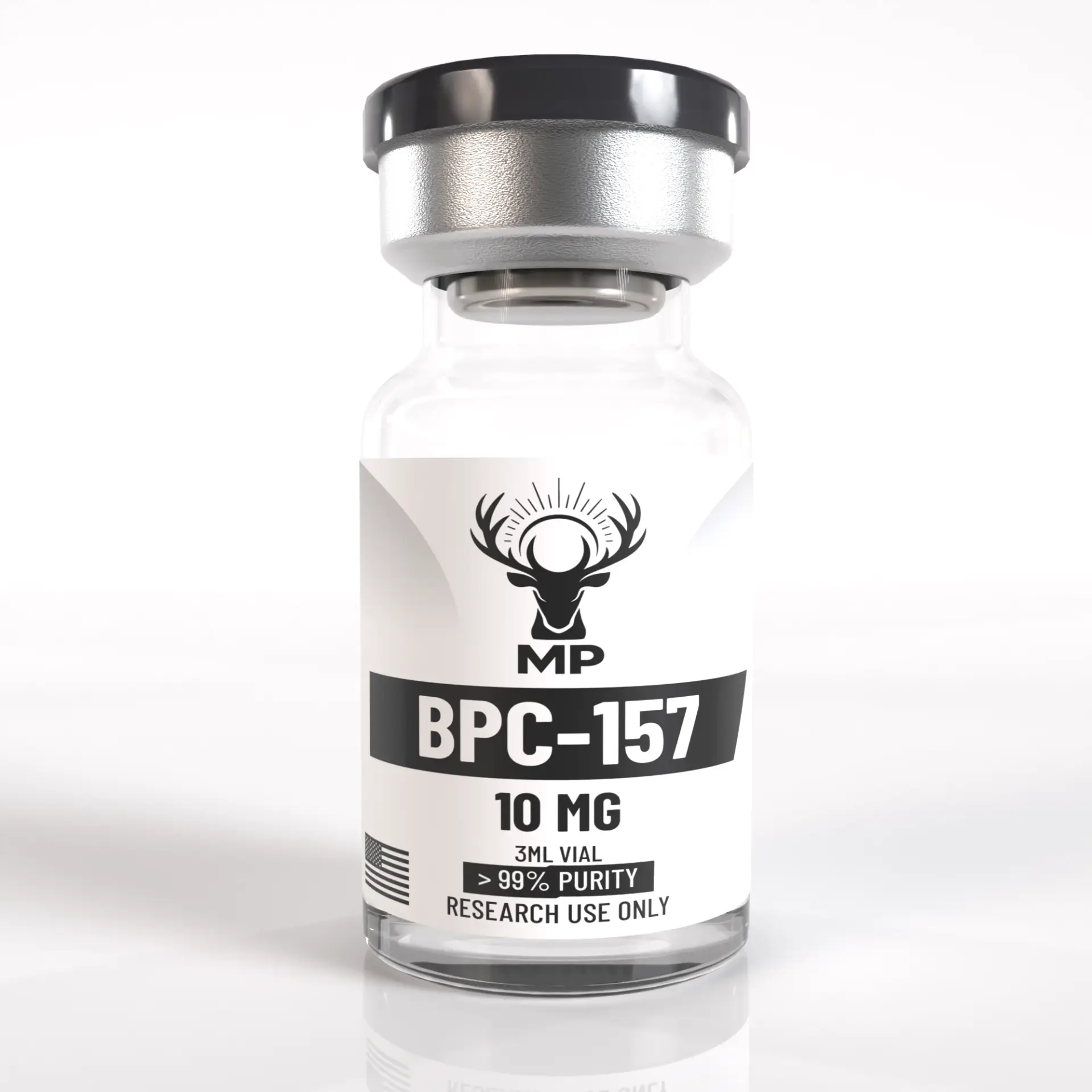
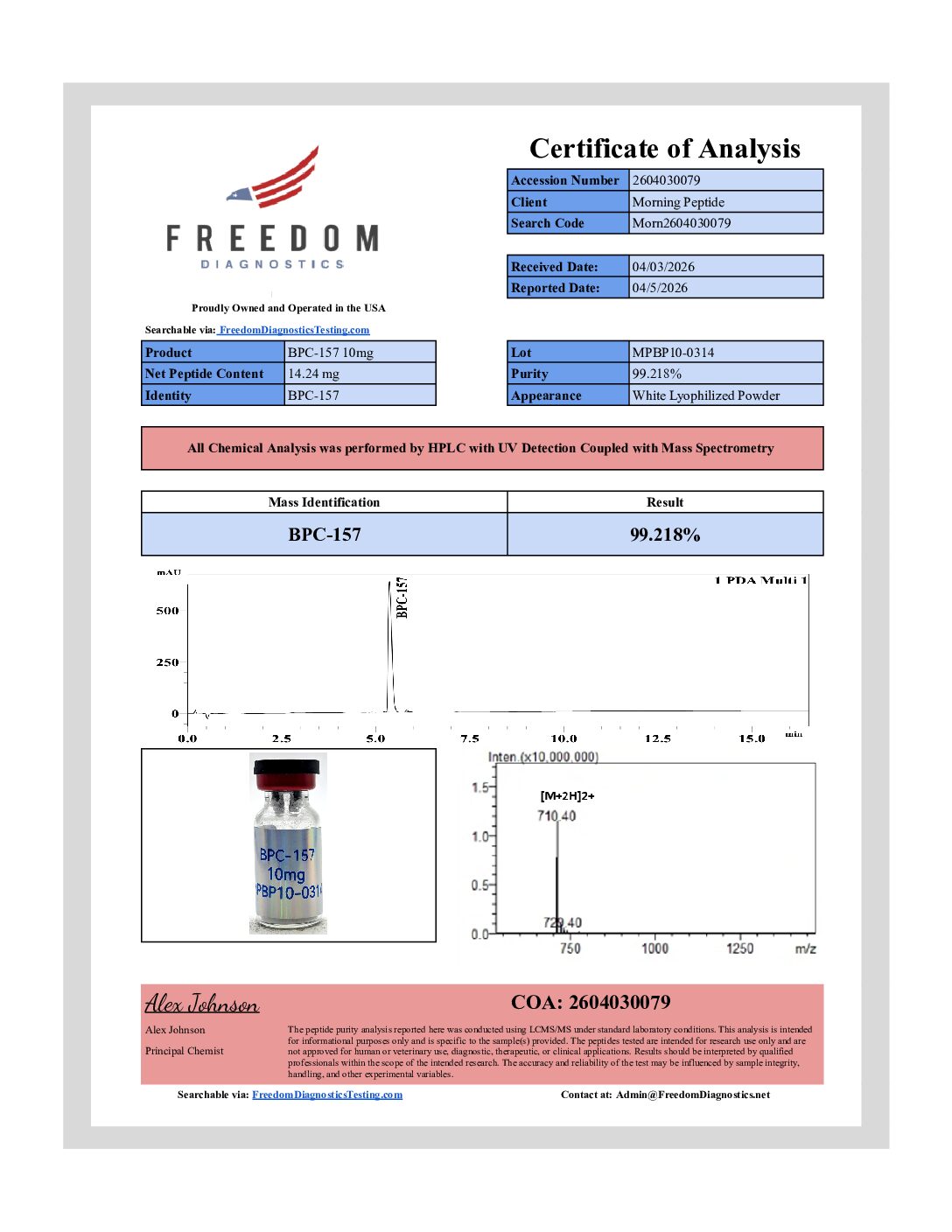
BPC-157
BPC-157 is a synthetic peptide derived from bovine intestinal mucosa, originally identified for its potential biological effects in the gastrointestinal and musculoskeletal systems. This peptide sequence (BP-157: BH(2-13)Gly-Pro-Pro-Ala-Pro-Gly-Pro-Pro-Ala-Pro-Gly) is studied in preclinical research for its potential to modulate tissue repair mechanisms. Below are detailed insights into its research context and findings.
Research Context
BPC-157 emerged from studies investigating the role of bioactive peptides in tissue regeneration and healing. Initial investigations focused on its potential to enhance gastrointestinal integrity, particularly in conditions such as acute stress ulcers, where damage to mucosal lining is a concern. Later research expanded to explore its effects on other tissue types, including connective tissues and joints.
Research Overview
Preclinical studies on BPC-157 have demonstrated its capacity to stimulate cellular and extracellular matrix production, which may contribute to accelerated wound healing and tissue repair. Researchers have examined its effects on cellular pathways, including the activation of growth factors and pro-survival signals, which are critical for regenerative processes. However, further translational research is required to determine its full mechanistic scope and potential therapeutic applications.
Key Research Focus Areas
- Gastrointestinal Healing: BPC-157 has been investigated for its role in repairing gastrointestinal mucosa under conditions such as ischemia-reperfusion injury and acute stress-related ulcers, where damage can lead to complications.
- Musculoskeletal Repair: Studies have explored its potential in tendon and ligament repair, cartilage regeneration, and osteogenic processes, with preliminary evidence suggesting improved tissue regeneration in animal models.
- Inflammatory Response: Research has examined its effects on inflammation-related pathways, including the modulation of pro-inflammatory cytokines, which could contribute to its therapeutic potential in chronic inflammatory conditions.
- Neural Repair: Emerging studies suggest potential benefits in neuroprotective applications, including the promotion of neuronal survival and repair mechanisms in experimental models.
- Metabolic and Endocrine Effects: Investigations have explored its potential impact on metabolic regulation and tissue homeostasis, though these findings remain preliminary and require further validation.
Important Disclaimers
This peptide is intended solely for research purposes and is not intended for human or animal consumption. All claims regarding its biological activity are based on preclinical studies and are not supported by approved clinical data. Users must adhere strictly to ethical guidelines and regulatory requirements governing peptide research.
For research use only. Not for human or animal consumption.
| Size | 10MG, 20MG |
|---|

Reviews
There are no reviews yet.